
BREAKING: Tree sit aims to block border wall construction
The action is reportedly the first tree sit in the U.S. to attempt to stop construction of a border barrier. Land defenders on the ground are asking people to show up and support.
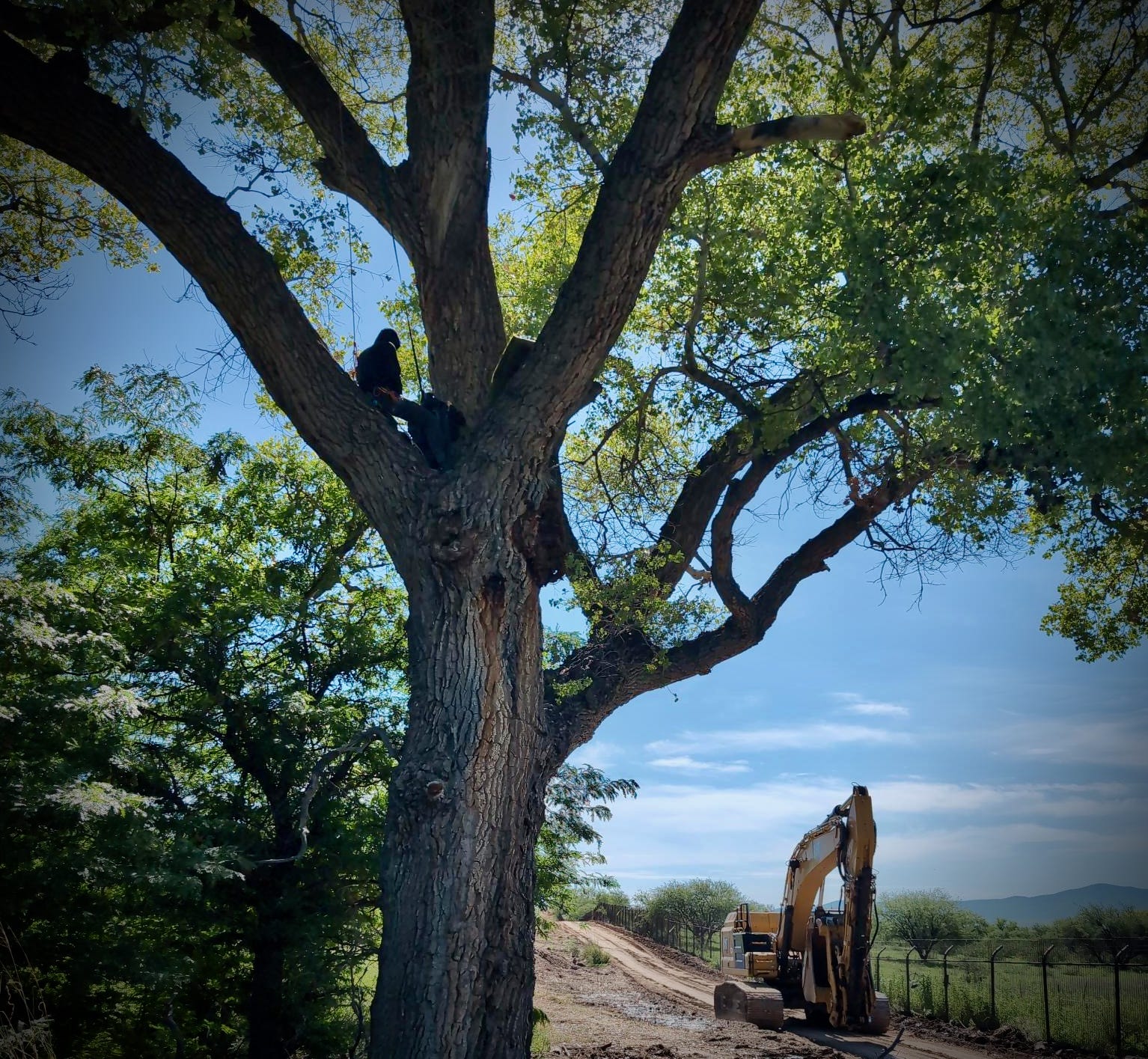
LOCHIEL, Ariz.— This morning, land defenders ascended an ancient cottonwood tree in Arizona’s San Rafael Valley and established a tree sit aimed at stopping the Trump administration from cutting it down to make way for two parallel 30-foot-tall border barriers. According to the Center for Biological Diversity, this is believed to be the first tree sit in the United States aimed at stopping the construction of a border wall.
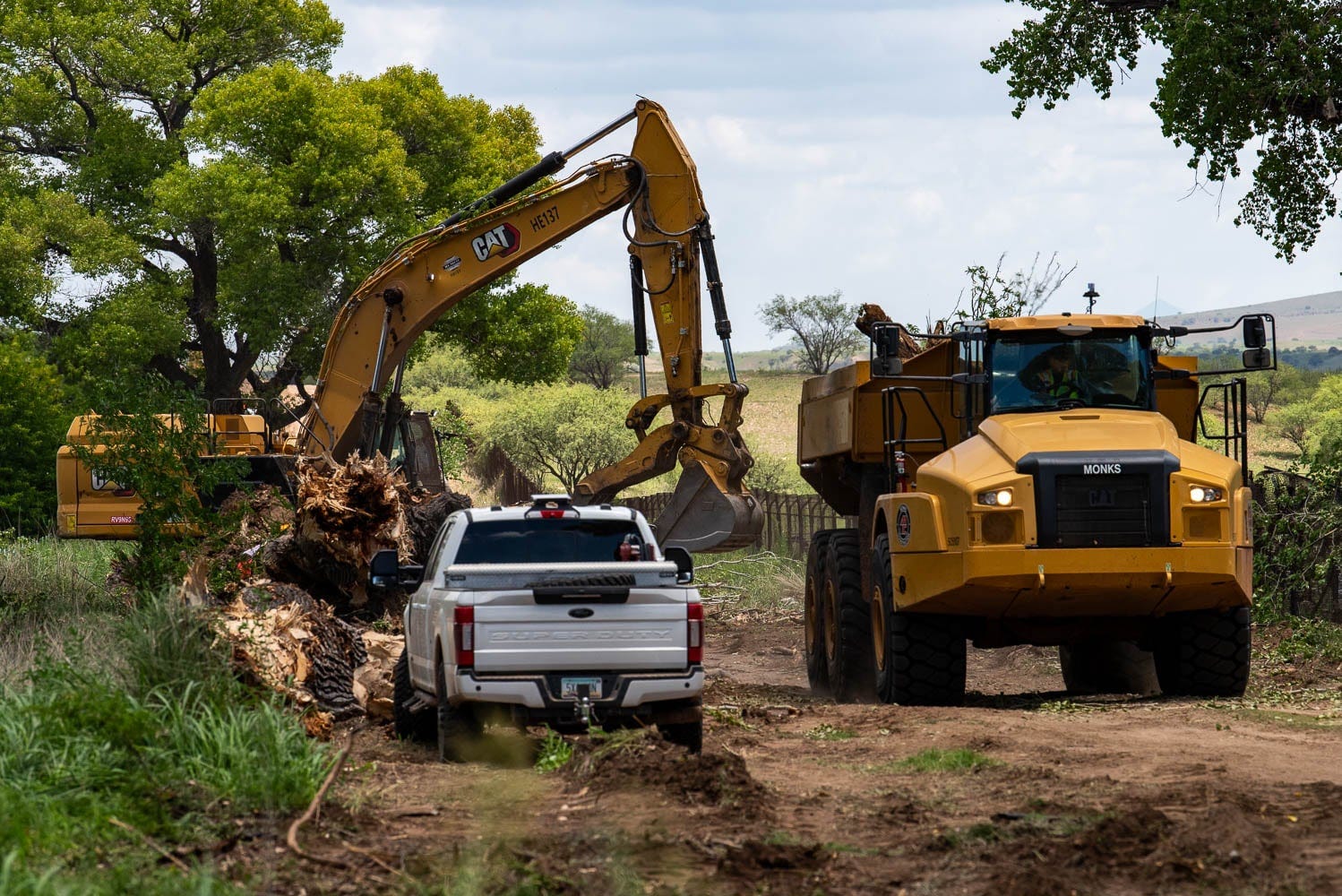
The direct action comes just two days after Department of Homeland Security contractor Fisher Sand & Gravel bulldozed three neighboring Fremont cottonwoods estimated to be 200 to 250 years old—substantially older than the border itself—to clear the land for the construction of the steel and concrete walls.
Land defenders on the ground are asking anyone who can to show up to support the tree sit and join the encampment. “It looks like we have a real chance of getting them to skip this section of wall,” one person currently at the site told me. “But more people are definitely needed. There’s good vibes, and it’s an incredibly beautiful area.”
Organizers emphasize that the encampment is a collectively run space and that people who want to join should come prepared to be self-sufficient, and to contribute whatever skills or resources they can.
Questions and donations can be directed to the group Rally for the Valley.
The three cottonwoods cut down earlier this week once stood along a stretch of the U.S.-Mexico line where mature trees formed a rare transboundary canopy, defying the ecocidal designs of the militarized border. These trees provided nesting habitat, shade, and shelter within an increasingly scarce riparian ecosystem that supports hundreds of animal species.
One land defender was arrested Monday while attempting to protect the trees and stop wall construction.
“Destroying these ancient cottonwoods is a death sentence for an entire ecosystem,” said Russ Mcspadden, Southwest conservation advocate at the Center for Biological Diversity. Infamously, the wall and its associated enforcement architecture likewise represent a death sentence for the people who migrate across and around it: every year, thousands of people die attempting to traverse the wall and the militarized landscape that extends over a hundred miles to its north.
This area of the San Rafael Valley also contains archaeological sites that preserve evidence of thousands of years of indigenous presence in what we now know, post-colonization, as “the borderlands.” Wall construction threatens these and other sacred sites, and has destroyed many others in recent years, just as it threatens the sovereignty of tribal nations living along and across the border.
Reporting on Monday for the Tucson Sentinel, journalist Paul Ingram provided some additional context:
“Lochiel sits in the San Rafael Valley, about 25 miles east of Nogales and not far from where the headwaters of the Santa Cruz River flow south to Mexico, where the channel loops and heads north at the twin border cities of Nogales.
Just beyond the hill, Fisher contractors have already laid the first section of the double barrier, part of the Trump administration’s expansive effort to completely seal the U.S.-Mexico border with a so-called “Smart Wall.”
Fisher was awarded a $334 million contract to build the wall, funded by a 2021 congressional appropriation. More funding is coming after Congress passed last year’s so-called One Big Beautiful Bill, along with additional bills a few months ago.”
The Department of Homeland Security is constructing the border wall under authorities that waive dozens of cornerstone environmental and cultural resource protection laws, allowing construction to proceed without reviews normally required under legislation like the National Environmental Policy Act, the Endangered Species Act, and the National Historic Preservation Act.
To stay informed about ongoing wall construction and attempts to stop it, follow the Center for Biological Diversity, Rally for the Valley, Laiken Jordahl, and Russ McSpadden.